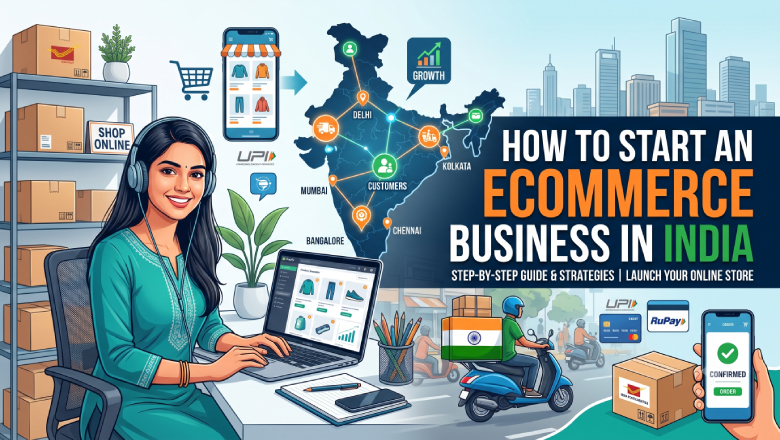
India's digital economy is growing at an unprecedented pace. With affordable internet access, increasing smartphone adoption, secure digital payment systems, and a rapidly expanding online customer base, there has never been a better time to launch an eCommerce business. Whether you're a retailer, manufacturer, wholesaler, startup, or D2C brand, selling products online offers limitless opportunities to reach customers across the country and even globally.
If you're wondering How to Start an eCommerce Business in India, this comprehensive guide will walk you through every stage—from selecting the right business model and registering your business to building a professional website, launching a mobile app, implementing digital marketing strategies, and scaling your operations.
- Entrepreneurs & Startups
- Small Business Owners & Retail Store Owners
- Manufacturers & Wholesalers
- D2C (Direct to Consumer) Brands
- Anyone planning to start an online business in India
India is one of the world's fastest-growing eCommerce markets, driven by UPI payments, digital banking, logistics innovation, and increasing consumer trust in online shopping. Businesses that establish a strong online presence today are better positioned for long-term growth and competitive advantage.
What is an eCommerce Business?
An eCommerce business refers to the buying and selling of products or services through digital platforms such as websites and mobile applications. Customers can browse products, compare prices, place orders, make secure online payments, and track deliveries without visiting a physical store.
Modern eCommerce extends beyond simply listing products online. A successful online store integrates inventory management, secure payment gateways, order processing, shipping, customer support, analytics, and digital marketing into a seamless shopping experience.
Businesses of all sizes—from local retailers to multinational brands—are embracing online commerce to reach wider audiences, reduce operational costs, and increase sales.
Key Characteristics of an eCommerce Business
- 24/7 product availability
- Online ordering and payment processing
- Nationwide or global customer reach
- Automated inventory management
- Real-time order tracking
- Customer reviews and ratings
- Digital marketing opportunities
- Scalable business model
A professionally designed online store not only improves customer experience but also builds trust and increases conversion rates. Businesses looking for scalable online stores should consider investing in a robust eCommerce Website Development solution that supports growth, security, and performance.
Why Start an eCommerce Business in India?
India has emerged as one of the most promising eCommerce markets in the world. Factors such as affordable internet connectivity, increasing smartphone usage, digital payment infrastructure, and improved logistics have transformed the way consumers shop.
1. Massive Customer Base
Millions of Indians shop online every day for groceries, electronics, fashion, healthcare products, furniture, and more. Tier-2 and Tier-3 cities are driving rapid growth.
2. Digital Payments Boom
UPI, credit/debit cards, net banking, wallets, and BNPL options have made digital transactions seamless and secure across India.
3. Lower Startup Costs
Starting an online store requires significantly lower investment compared to multiple retail outlets, operating with lean infrastructure.
4. Rapid Business Scalability
Expand geographically across state lines without physical location constraints by leveraging digital marketing and logistics networks.
5. Government Support Initiatives
Government initiatives such as Digital India, Startup India, GST simplification, ONDC (Open Network for Digital Commerce), and improved digital infrastructure continue to encourage entrepreneurs to embrace online business models.
6. Mobile Shopping is Booming
A significant percentage of online purchases now happen through smartphones. Businesses can improve customer engagement by investing in eCommerce App Development to provide a faster, personalized, and convenient shopping experience.
Different eCommerce Business Models
Before building your online store, it is important to choose the business model that aligns with your products, customers, and long-term goals.
B2B (Business to Business)
In the B2B model, businesses sell products or services to other businesses rather than individual consumers. Examples include manufacturers supplying retailers, wholesalers serving distributors, or software companies providing enterprise solutions.
Key Advantages:- Higher order values and bulk purchasing
- Long-term customer relationships and repeat contracts
- Predictable revenue streams and custom pricing terms
B2C (Business to Consumer)
B2C is the most common eCommerce model, where businesses sell directly to end customers. Online fashion stores, electronics retailers, grocery platforms, and lifestyle brands typically follow this model.
Key Advantages:- Large customer base & high market volume
- Quick purchasing decisions & direct brand building
- Recurring customers through loyalty programs
D2C (Direct to Consumer)
Direct-to-Consumer brands manufacture products and sell directly through their own website or mobile app without relying heavily on intermediaries. This approach provides better control over pricing, branding, and customer relationships.
Key Advantages:- Higher profit margins by eliminating middlemen
- Direct customer interaction & personalized marketing
- Full ownership of customer data & analytics
Multi-Vendor Marketplace
Marketplace businesses connect multiple sellers with buyers on a single platform. Popular examples include multi-vendor marketplaces where different merchants list their products while the platform manages transactions and customer experience.
Key Advantages:- Vast product catalog without holding inventory
- Multiple revenue streams (commissions, seller fees, ads)
- Rapid platform scalability
Dropshipping
Dropshipping allows entrepreneurs to sell products without maintaining physical inventory. Orders are forwarded directly to suppliers, who handle packaging and shipping to customers.
Key Advantages:- Minimal upfront capital required
- No warehouse management overhead
- Easy to launch and test product ideas
As your business grows, partnering with an experienced eCommerce App Development Company in Chennai can help you build custom solutions tailored to your business model, customer experience, and future expansion plans.
Step-by-Step Guide to Start an eCommerce Business in India
Starting an eCommerce business involves much more than launching a website. It requires careful planning, understanding your target audience, choosing the right technology, ensuring legal compliance, and implementing effective marketing strategies. Follow these steps to build a strong foundation for your online business.
Conduct Thorough Market Research
Every successful online business begins with thorough market research. Before investing your time and money, understand what customers are looking for, identify competitors, and evaluate market demand.
Market research helps answer critical questions:
- Who are your target customers and what are their buying habits?
- Which product categories have high demand and healthy margins?
- What pricing strategies do competitors follow?
- What unique value proposition will differentiate your brand?
Select the Right Products & Category
Choosing the right products significantly influences your business success. Focus on products with healthy profit margins, consistent demand, and manageable shipping requirements.
Popular eCommerce Categories in India:
- Fashion & Apparel, Beauty & Personal Care
- Electronics & Mobile Accessories
- Home, Kitchen & Furniture
- Organic Foods, Healthcare & Pet Supplies
Find Reliable Suppliers & Manufacturers
Your suppliers directly impact product quality, delivery timelines, and customer satisfaction. Whether you manufacture products or source them from wholesalers, choose suppliers carefully.
- Verify GST registration and business credentials
- Request product samples before placing bulk orders
- Negotiate pricing, return policies, and delivery timelines
Register Your Business & Obtain GST Registration
Business registration builds credibility and helps you comply with Indian regulations. Choose an appropriate business structure based on scale.
| Business Type | Suitable For | Key Benefits |
|---|---|---|
| Sole Proprietorship | Individuals & Solo Founders | Minimal compliance, easy to start |
| Partnership / LLP | Multiple Partners | Shared investment, limited liability |
| Private Limited Company | Startups & Funded Ventures | High credibility, investor friendly |
GST registration enables you to issue GST-compliant invoices, claim input tax credits, and register on online payment gateways and marketplaces.
Select a Domain & Build Your eCommerce Website
Your website is your digital storefront. It should provide a fast, secure, and user-friendly shopping experience across mobile devices and desktops.
Investing in professional eCommerce Website Development ensures your store is scalable, fast-loading, mobile responsive, and optimized for maximum conversions.
- Responsive design & SSL security certificate
- Seamless search, filter, cart, and checkout user experience
- Integrated coupon, discount, and order tracking system
Develop Mobile Commerce App & Integrate Payment Gateways
With mobile shopping dominating online commerce in India, a dedicated mobile app increases repeat sales and retention.
Partner with an experienced eCommerce App Development provider to launch feature-packed Android & iOS mobile applications.
Payment Options to Offer: UPI (GPay/PhonePe/Paytm), Credit/Debit Cards, Net Banking, Wallets, EMI, Cash on Delivery (COD), and BNPL (Razorpay, Cashfree).
Set Up Logistics, Product Photography & SEO Content
Integrate automated shipping aggregators (e.g. Shiprocket) for real-time tracking and nationwide multi-courier coverage. High-resolution product photos and original, keyword-rich SEO product descriptions will drive organic sales.
Digital Marketing Strategies for eCommerce Success
Launching your eCommerce website is only the beginning. To attract visitors, generate qualified leads, and convert them into loyal customers, you need a well-planned digital marketing strategy combining SEO, social media, paid ads, email campaigns, and WhatsApp automation.
1. Search Engine Optimization (SEO)
SEO delivers long-term organic traffic without paying for every click. Optimizing product pages, category pages, and buying guides helps your store rank high on Google.
| SEO Element | Best Practice Recommendation |
|---|---|
| Title Tag & Meta Description | Include targeted primary keywords naturally within character limits. |
| URL Structure | Short, clean, descriptive, and keyword-friendly URLs. |
| Structured Schema | Product, Article, FAQ, and Breadcrumb Schema markup. |
| Page Speed & Core Web Vitals | Fast server response, compressed WebP images, and clean code. |
2. Social Media & Meta Ads (Facebook & Instagram)
Use high-impact visual content, Reels, user-generated reviews, and targeted Meta Ads to showcase your products to ideal demographic segments. Install Meta Pixel to run retargeting ads for abandoned cart visitors.
3. Google Ads & Performance Max
Capture high-intent buyers searching directly for your products using Google Search Ads and Shopping Ads.
4. Email & WhatsApp Marketing
WhatsApp and Email automation drive high open rates for order updates, discount coupons, restock alerts, and automated abandoned cart recovery.
Essential Features of a Modern eCommerce Platform
A modern eCommerce platform must combine intuitive front-end shopping features with a powerful administrative backend to manage operations effortlessly.
Frontend Features
- Mobile Responsive & Fast Loading
- OTP / Social Login
- Smart Search & Category Filters
- Wishlist & Easy Checkout
- Real-Time Order Tracking
Admin Panel Features
- Inventory & Catalog Management
- Order & Shipping Fulfillment
- Coupon & Discount Rules
- Sales & GST Reports
- Customer Relationship Management
Recommended Tech Stack
| Component | Recommended Technologies |
|---|---|
| Frontend | HTML5, CSS3, Bootstrap, Tailwind CSS, React.js, Vue.js |
| Backend Framework | PHP (CodeIgniter / Laravel), Node.js, ASP.NET Core |
| Database | MySQL, PostgreSQL, MariaDB |
| Mobile App Framework | Flutter, React Native (Android & iOS) |
| Payment Gateways | Razorpay, Cashfree, PayU |
| Shipping Aggregators | Shiprocket, Delhivery, Blue Dart |
Cost to Start an eCommerce Business in India
The budget required varies based on your scale, technology choice, custom features, and digital marketing strategy. Below is an estimated cost breakdown for planning purposes:
| Expense Item | Estimated Cost (INR) |
|---|---|
| Domain Name & Cloud Hosting | ₹3,800 – ₹16,500 / year |
| Business Registration & Compliance | ₹2,000 – ₹20,000 |
| Custom eCommerce Website Development | ₹30,000 – ₹2,50,000+ |
| Mobile App Development (Android & iOS) | ₹50,000 – ₹5,00,000+ |
| Product Photography & Branding | ₹10,000 – ₹80,000 |
| Initial Digital Marketing Budget | ₹15,000 – ₹1,00,000+ / month |